

My buddy Rob – lifelong golfer, plays 40+ rounds a year, has a strong opinion about everything from putter grips to the correct way to order a post-round beer – told me once that Canada isn’t really a golf country.
“Hockey country,” he said, somewhere between the 13th green and the 14th tee on a mid-July afternoon. “Maybe lacrosse. But golf? Come on.”
I didn’t have a great counter-argument at the time.
I do now.
Golf in Canada is bigger than most people – including a lot of golfers – realize. Six million Canadians played last year. They logged 74 million rounds – a 24% jump from 2019. The industry contributes $23.2 billion to Canada’s GDP, supports 236,000 person-years of employment, and pumps $4.7 billion in tax revenues into the economy every year. Charity golf events alone raised $382 million in a single season.
Rob, buddy, this is a golf country.
Here’s the full picture – the numbers, the trends, and a few things worth knowing before you book your next round north of the border.
The Quick Hits
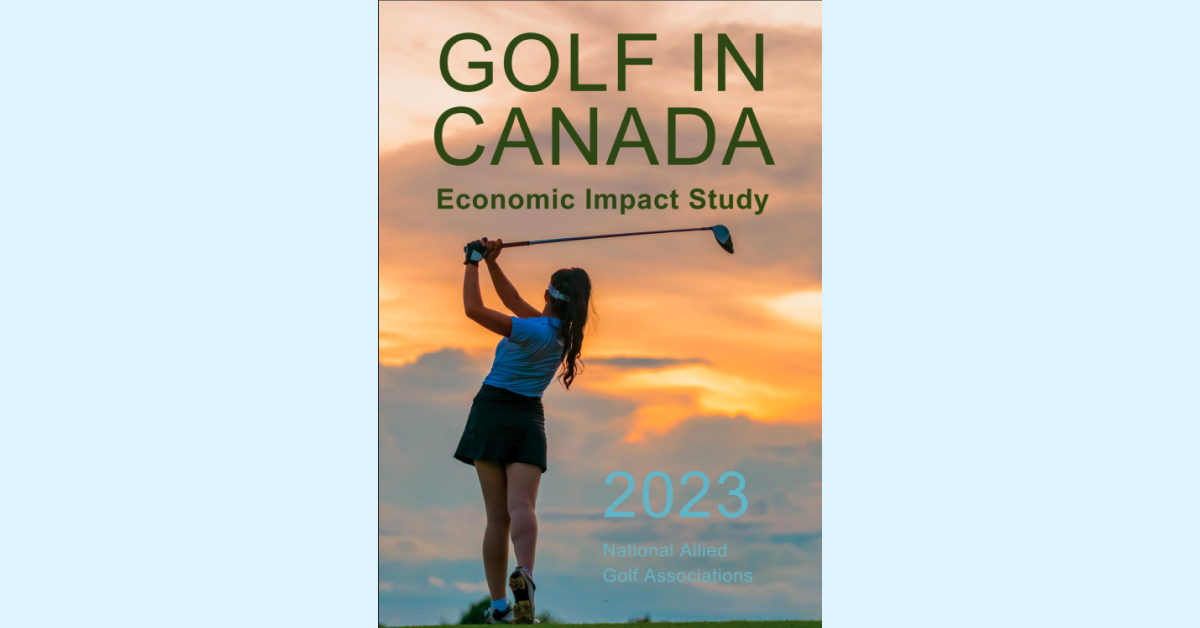
Before the detail, here’s the snapshot from the NAGA Canadian Golf Economic Impact Study (2024):
- $23.2B – golf’s total GDP contribution across Canada
- 74 million – rounds played in 2023, up 24% from 2019
- ~6 million – Canadians who played golf in 2023, an all-time high
- $382M – raised by charity golf events in one season
- #1 – golf’s rank among Canadian participation sports
That last one might be the most surprising stat in the bunch. Canada’s most-played sport isn’t hockey. It’s golf. And it isn’t particularly close.
Participation – Who’s Playing and How Often
The player base is big. And it’s sticky.
The pandemic sent Canadians outdoors in numbers nobody predicted, and golf caught that wave better than almost anything else. Four years later, those same golfers are booking leagues, joining clubs, and dragging friends into the game with a level of enthusiasm that membership teams are still adjusting to.
Canada ranks second worldwide for total golf facilities – behind only the U.S. That means the supply is there. Based on 74 million rounds, the demand is meeting it.
What’s interesting is where people are playing. Golf in Canada isn’t just a cottage-country activity or a destination sport. It’s a neighbourhood hub in hundreds of towns across the country – the kind of place where you know the starter by name and the post-round routine is as familiar as the back nine.
People aren’t just playing more. They’re playing near home. The social layer of the game – the Sunday morning regulars at local golf courses, the work league, the scramble fundraiser – shows up consistently in surveys as a major driver of participation. Golf has community woven into it in a way that keeps people coming back.
The Economic Engine
Golf isn’t only birdies and bad swing thoughts – it’s paycheques, payrolls, and a lot of small businesses working in sync.
Layer in direct spending on green fees, memberships, equipment, and travel – then add the supply chain and household re-spend – and you land on a $23.2B GDP impact. That’s not a rounding error. That’s an industry.
Here’s how it breaks down, per the NAGA study:
- Golfer spending: $14.2B GDP
- Course operations: $8.1B GDP
- Capital investments: $907M GDP
Total employment supported: 236,000 person-years. Tax revenues generated: $4.7B.
To put that in perspective – the golf industry in Canada employs more people than some entire provincial economies. Every pro shop, grounds crew, lesson program, restaurant, and golf travel operation is part of a supply chain that runs deep.
Off-Course Golf – Friend, Not Foe
If you’ve stepped into a simulator lounge on a snowy Tuesday, you already know what the data confirms: off-course golf is the on-ramp for new players and a winter maintenance plan for die-hards.
Two-thirds of surveyed golfers have tried simulators. Of those, 91% said it didn’t reduce their time on the outdoor course – and a healthy slice said it actually nudged them to play more. That’s counterintuitive until you think about it. When you’re hitting shots in January, you’re not replacing golf. You’re feeding the itch until the courses open.
For Canada, where winter has strong opinions and a long memory, that’s a significant finding. Topgolf-style entertainment venues, simulator lounges, and indoor golf bars are gaining traction across the country – and the data says they’re growing the game, not cannibalizing it.
One more number worth filing away: 95% of surveyed golfers say the game improves their overall mental wellness. That tracks with what you see every weekend – four hours outside with friends calms the noise in a way that’s genuinely hard to replicate.
Juniors, Women, and New Golfers – the Most Encouraging Trend
The future of the game looks pretty good from where we’re standing.
Recent Golf Canada data shows a 6% increase in active women golfers and 33% growth among BIPOC golfers year over year. Those aren’t marginal shifts – they’re meaningful changes in who the game belongs to.
Program by program:
- First Tee Canada has now surpassed 100,000 youth participants since launch. That’s a lot of kids who grew up knowing the game, which means a lot of future tee time bookings.
- Youth on Course expanded to nine provinces with $5-or-less rounds, enabling 32,900+ plays by more than 5,000 unique junior golfers. Affordability matters in a sport that has historically been expensive to access – and this program delivers on it.
- She Plays Golf festivals in Calgary, Toronto, and Vancouver offer an easy, judgment-free on-ramp for women and girls just getting into the game.
None of this happens by accident. It happens because Golf Canada, course operators, and a growing list of program partners made deliberate choices to open the doors wider. The tee sheet is genuinely better for it.
Where to Play – A Few Courses Worth the Drive
Canada’s public golf is world-class. If you’re building a bucket list, here are some names that belong on it:
- Cabot Cliffs and Cabot Links, Nova Scotia – ocean-side links golf that belongs in any conversation about the best courses on the planet
- Fairmont Jasper Park Lodge and Banff Springs, Alberta – Stanley Thompson designs draped over the Rockies, built in an era when “destination golf” meant something different
- Muskoka Bay, Ontario – Canadian Shield rock, dramatic elevation changes, and shot-making that rewards course management over power
- Greywolf, British Columbia – the Cliffhanger par-3 is the photo everyone posts, but the whole course earns the trip
SCOREGolf’s Top 59 Public Courses list is the best starting point for deeper research – and a reliable source of debate among Canadian golfers, which is about half the fun.
Top TeeTime Golf Pass Courses in Ontario
For Ontario golfers, these five partner courses consistently rank among the best in the province – and all are accessible at member rates through the pass:
- Royal Woodbine Golf Club – One of Toronto’s top public courses, designed by Graham Cooke. A genuine test in the heart of the GTA with a championship layout and immaculate conditioning.
- Grey Silo Golf Course – Waterloo Region’s standout public layout, set along the Grand River with strong variety across 18 holes. Consistently praised for conditions and value.
- Hockley Valley Resort – A Muskoka-style escape within an hour of Toronto. Rolling terrain through the Hockley Hills, mature trees, and a true resort experience.
- Settlers’ Ghost Golf Club – Just outside Barrie, this 27-hole layout plays through rugged Shield terrain with dramatic elevation and shot-making demands.
- Eganridge Resort Golf Club & Spa – Set on the shores of Sturgeon Lake near Fenelon Falls – golf, spa, and waterfront lodging make it a natural choice for a golf getaway.
TeeTime Golf Pass has member pricing at more than 130 golf courses across the province – from GTA daily fee courses to Muskoka getaways – with no booking fees attached.
Regional Notes That Matter
The national numbers are impressive. The regional picture is worth knowing too:
- Ontario is Canada’s biggest golf economy – roughly $8.0B in GDP impact on its own, driven by the sheer density of courses, players, and golf travel in the province
- British Columbia runs close at approximately $5.3B – and with courses like Greywolf and a milder coastal climate, the season stretches longer than most people expect
- Prince Edward Island is small but punches well above its weight – among the most golf-rich provinces per capita, and nearly all of it open to the public. Perfect for a buddies trip where the whole point is the courses, not the amenities
- Canada’s facility count ranks near the top globally, with only the U.S. carrying more total courses in absolute terms
Seasonality – Reading Canada’s Weather Game
Summer is go-time. Shoulder seasons can be sneaky good. And some regions run longer than you’d expect.
Other regions had a different experience. Alberta operators reported roughly three weeks of weather-related closures by late fall, with Ontario and the Prairies not far behind. Canada is a big country, and the golf season looks different in Victoria than it does in Calgary.
The practical lesson: book peak season earlier than you think you need to. Demand is real – tee sheets fill up, especially on weekends in June and July. And if the weather shuts you down unexpectedly, a simulator night isn’t a bad backup plan. The data says you’ll probably play more because of it, not less.
Sustainability – the Quiet Work Happening on Every Course
Operators aren’t waiting for external pressure – they’re getting ahead of it.
NGCOA Canada and the Canadian Golf Superintendents Association have built a national Sustainable Golf Program, giving courses practical tools for water management, energy efficiency, habitat conservation, and climate resilience – plus industry recognition for operators who lead on it.
Inside the ropes, the most visible result is better turf and more consistent conditions from season to season. Good stewardship turns out to be good business. The courses that invest in sustainable practices are the ones that hold up best when the weather doesn’t cooperate.
It’s quiet work – nobody posts about the fertilizer program on social media – but it’s real, and it matters for the long-term health of golf in Canada.
What to Do With All of This
A few practical takeaways:
- Book a little earlier in peak season – the demand is real and tee sheets fill fast. Being flexible by an hour on start time can open up a lot of options without sacrificing the course you actually want to play.
- Keep a winter plan – simulators don’t just fill the off-season. The data says they make you a more active outdoor golfer, not less. Find a lounge, keep the swing grooved, and show up in April ready to play.
- Bring someone new – the programs are there, the welcome mat is genuinely out, and the game is better for every new player who walks through the gate. Juniors, colleagues, spouses, the friend who always says “I’m not a golfer.” That friend is usually a golfer within three holes. Try out the TeeTime Golf Pass app to find tee time deals near you to play with a friend.
Rob still hasn’t fully admitted he was wrong. But last month he texted me asking where to play on his trip to Nova Scotia. I sent him the Cabot Links website and told him to pack extra sleeves.
He texted back two words: “Book it.”
Sources: NAGA Canadian Golf Economic Impact Study 2024 via Golf Canada, Golf Canada 2024 participation and growth report, SCOREGolf, and Golf Canada program announcements.